
Introduction
As global investments continue to diversify, Dubai’s freehold zones present compelling opportunities for foreign investors to explore. Given the economic resilience, superior infrastructure, and robust regulatory structures, a continuous rise in foreign capital inflows into Dubai’s real estate sector has been witnessed over the past decade. Particularly, the off-plan investment model, which allows purchasers to secure properties at a discounted rate before their completion, has attracted a broad range of investors with its promise of high returns.
Understanding Freehold Zones
Freehold zones in Dubai are defined areas where non-Gulf Cooperation Council (GCC) foreign investors have the right to full property ownership. Prior to 2002, foreign ownership in Dubai was heavily restricted, but policies have since changed dramatically. Today, international buyers can acquire properties in such designated zones, thereby enjoying the same ownership rights as UAE nationals.
OFF-PLAN Investments: A Growing Trend
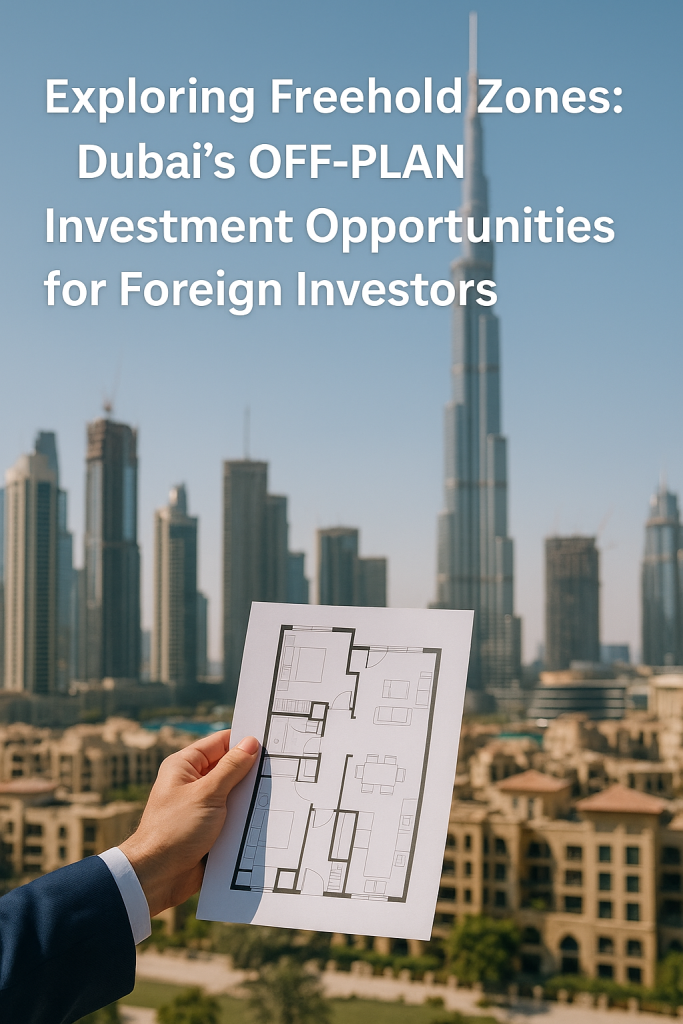
The trend of off-plan investments in freehold zones has come into the spotlight for their enticing prospects. This is where investors agree to buy properties that are yet to be constructed. The main advantage is the lower upfront costs and the potential for significant returns once the property is completed and sold at a higher rate or rented out for continuous income.
Dubai Real Estate’s Growth
Dubai’s real estate sector continues to be a prominent contributor to its GDP growth. As per Dubai Land Department (DLD) data, the first half of 2021 marked a significant increase in real estate transactions, with a total of 27,373 residential transactions completed, valued at AED 61.97 billion. This reflects the healthy, adaptable real estate market of Dubai that continues to attract foreign investors.
Intelligent Investment Strategy
Investing in freehold zones allows for a strategic, long-term commitment to Dubai’s vibrant real estate sector. Due diligence, familiarity with the local market, and understanding the implications of maintenance costs and service charges are crucial to maximise returns. Investors must also choose reliable developers with a track record of delivering quality properties on time.
Conclusion
Dubai’s real estate market, with its freehold zones and off-plan investment opportunities, is an exciting territory for foreign investors to explore. By carefully navigating through these avenues, international buyers can take advantage of the city’s fast-growing market and invest smartly, subsequently contributing to the dynamic skyline of Dubai.